
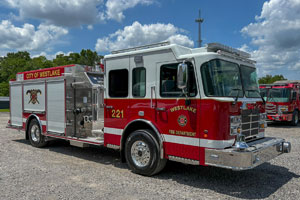
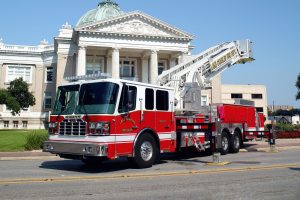
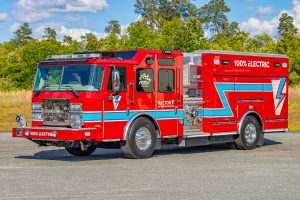
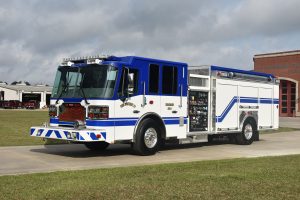

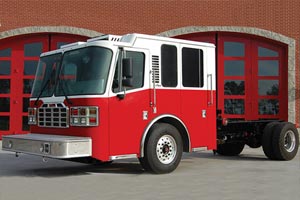
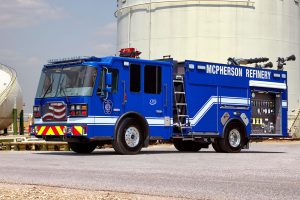
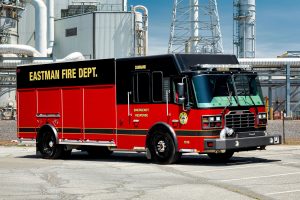
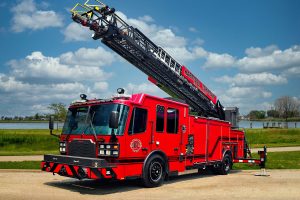
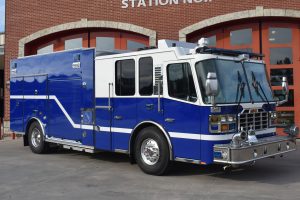
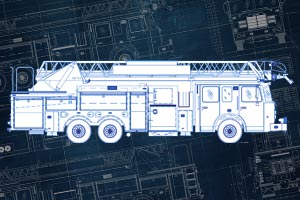
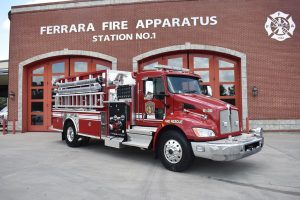
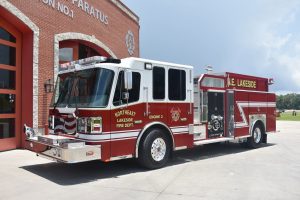
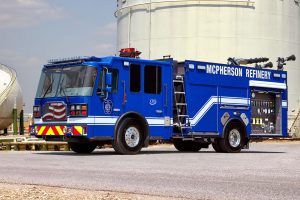
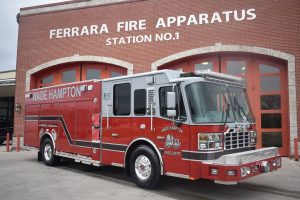
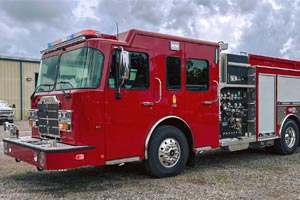
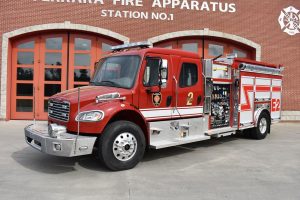
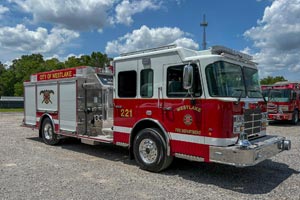


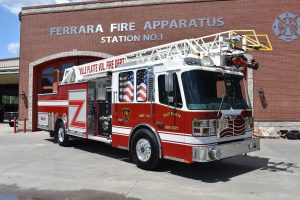
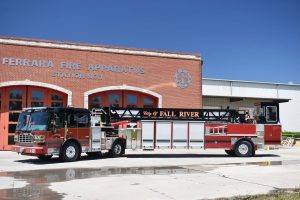
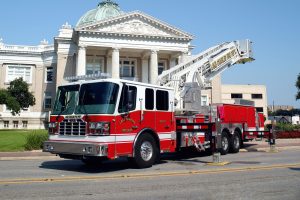


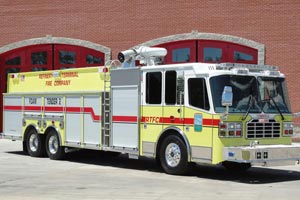
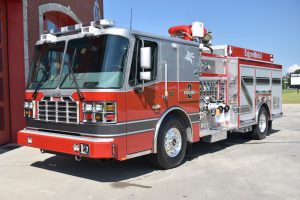
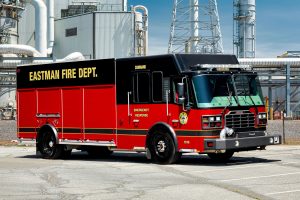
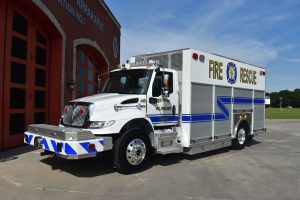
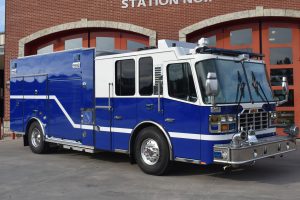
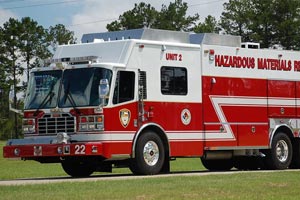
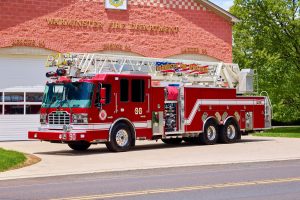
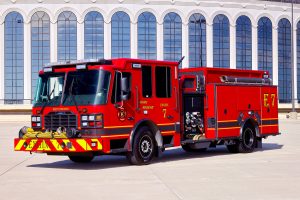
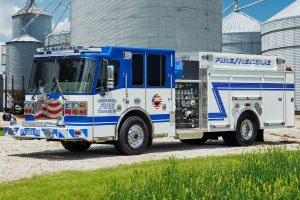
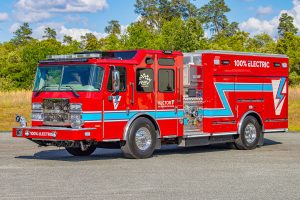





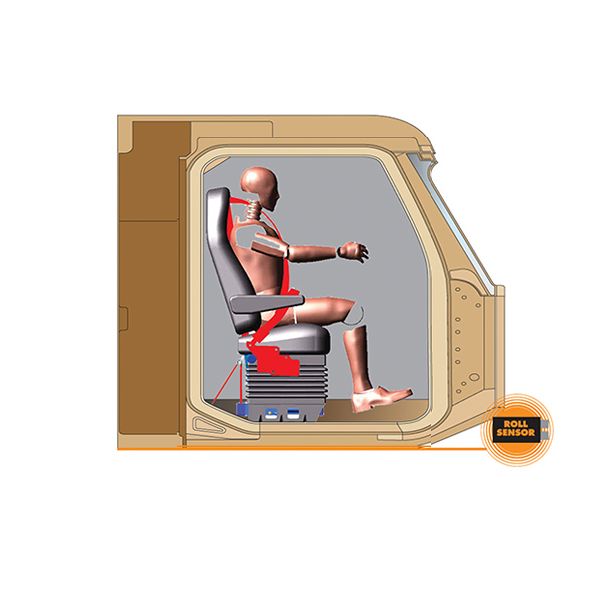
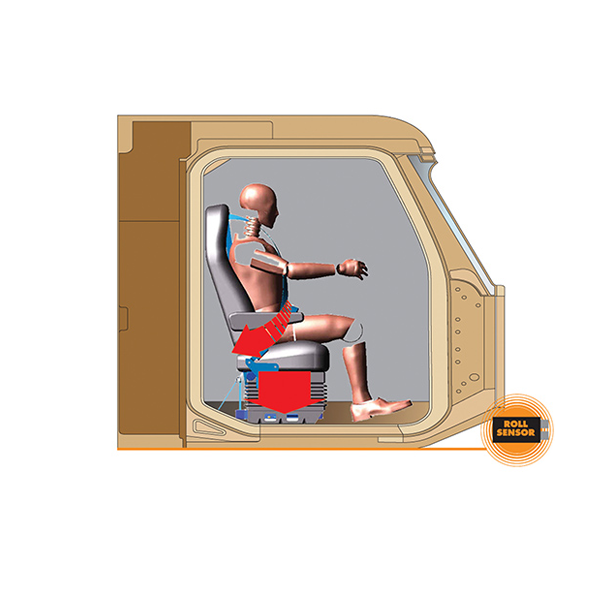
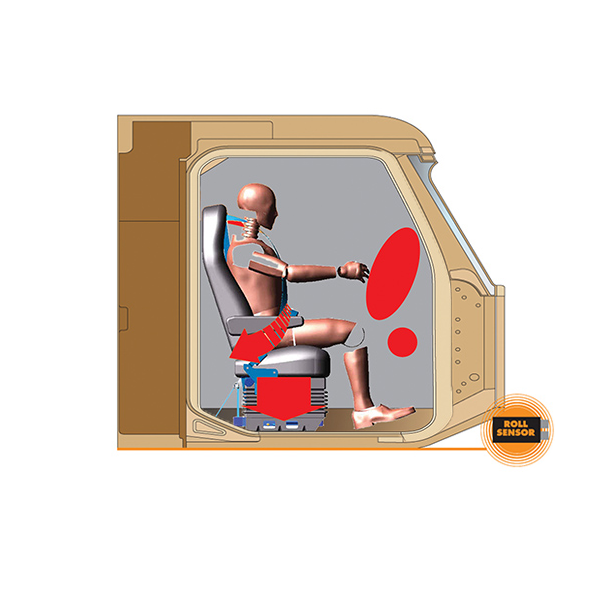
—Ferrara Fire Apparatus has continued to make crew safety a primary area of focus and recently partnered with IMMI to develop the Complete Airbag Protection CAP+ Second Generation Airbag System. CAP+ is designed to protect firefighters in the most common type of accident—a head-on crash. When the CAP+ sensor detects a frontal crash, it sends a signal to initiate three events that provide protection for the driver and first officer.
During the development of CAP+, IMMI engineers acquired data through static and dynamic testing at the Center for Advanced Product Evaluation (CAPE). This vehicle-specific data guided their design of a system that helps protect firefighters through the placement of airbags in optimized locations within the cab.
Our custom chassis was tested to and above the requirements of the Economic Commission for Europe Structural Standards (ECE-R29), the European benchmark for crash testing and safety. This standard is used throughout the commercial trucking industry here in the U.S. All testing took place at Ferrara Fire Apparatus’ headquarters in Holden, Louisiana, under the auspices of A. K. Rosenhan, a Professional Engineer affiliated with Mississippi State University. Mr. Rosenhan is an internationally recognized fire expert.
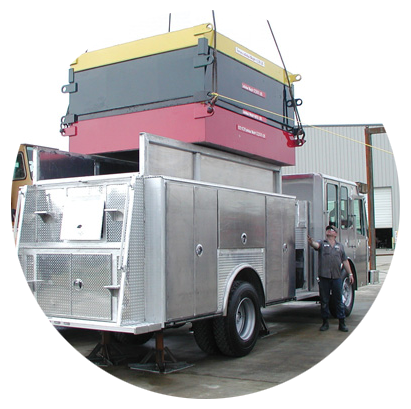
Structural Integrity
We started with a 10-metric-ton (22,000 pounds) vertical load, which is the ECE-R29 standard plus 4,400 additional pounds. The structural integrity of the roof supported the load without damage to the cab’s personnel area.
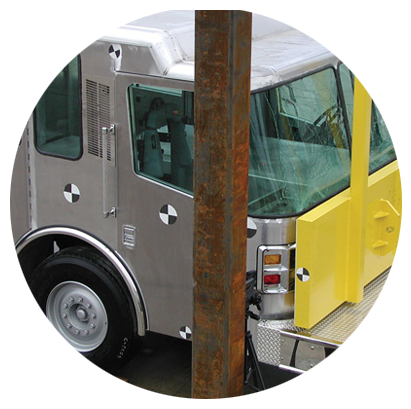
Frontal Impact and Vertical Load Testing
Next, a frontal impact test was conducted to simulate the impact of a head-on collision. The load subjected to the front of the cab, 3,736 pounds, is in excess of 127% of the ECE-R29 standard. The 3,736-pound pendulum fell from beyond 11 feet for a 5,746 kg-m impact into the front of the cab, well above the bumper. This is equal to an impact velocity of 18.2 mph. To pass, the cab crew compartment must not be compromised. The cab also must remain attached to the frame. All doors on the cab remained closed during the impact but were easily opened afterwards. There was no passenger compartment intrusion, nor were there any failed structural components in the cab.
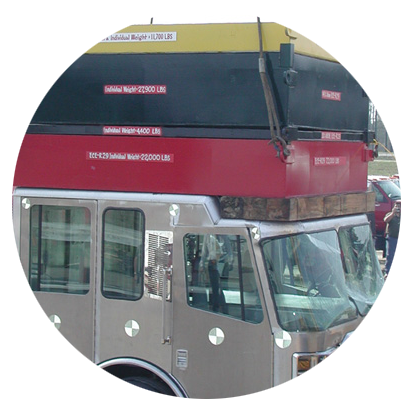
Cab Endurance Validated
Following the first vertical load and frontal impact tests, second and third vertical load tests were conducted on the same cab. The cab was loaded for the second test to 54,300 pounds and then a third time to 65,979 pounds. The cab roof successfully supported 33 metric tons, more than three times the required amount as dictated by ECE-R29 standard! There was no failure of the cab structure or mountings, no passenger compartment intrusion or degradation of occupant survival space, or any other structural failure.
Pushing Performance Limits
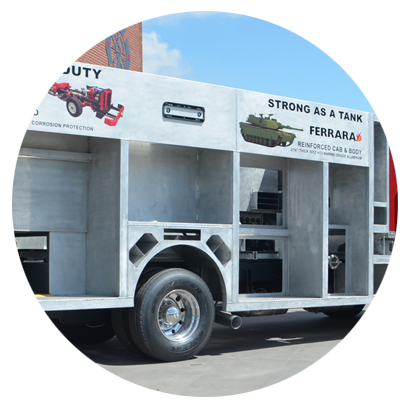
Not resting with a string of successful tests on the cab and chassis, Ferrara successfully placed all 65,979 pounds on the extruded aluminum body. This is not a required part of the ECE-R29 standard but is a measure of the strength of the body and an additional measure of protection for apparatus occupants. Placing the weight on the body showed the entire apparatus could withstand extreme loading.